
 0300 087 4232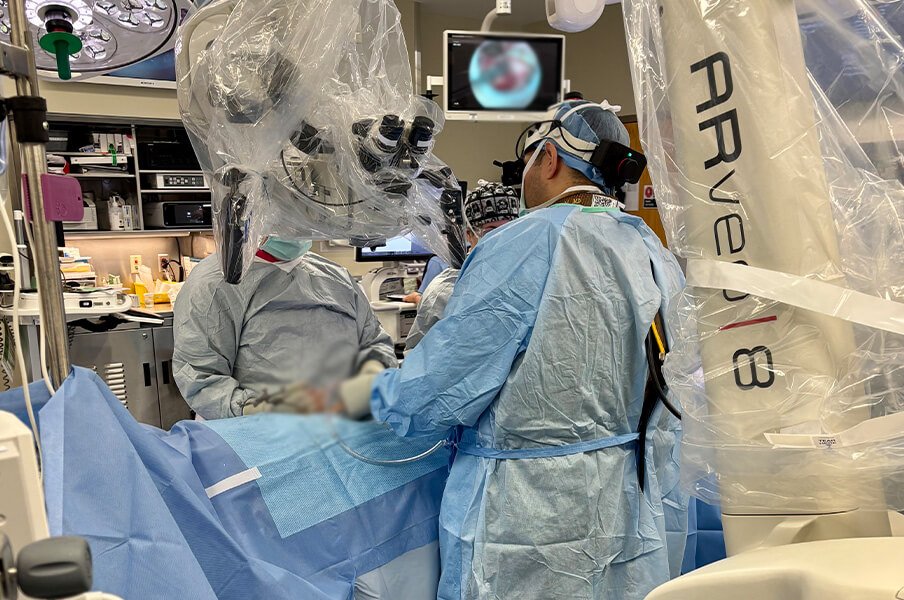
The New Era of Spine Surgery in 2026
For decades, spine surgery required large incisions, significant muscle disruption, and long recovery periods. Today, the landscape has fundamentally changed. In 2026, the integration of Artificial Intelligence (AI) and robotic-assisted platforms is expanding treatment options and allowing for highly personalized surgical care.
How Robotics Change the Game
Robotic-assisted platforms, combined with advanced CT and MRI imaging, allow neurosurgeons to plan complex spinal procedures in a 3D virtual environment before the surgery even begins. During the operation, the robotic arm guides the surgeon’s instruments with sub-millimeter accuracy.
This means:
- Smaller incisions (Minimally Invasive Surgery)
- Less muscle damage and reduced postoperative pain
- Pinpoint accuracy in placing spinal screws and implants
- Faster recovery and shorter hospital stays
AI in Surgical Planning
Artificial Intelligence is now actively used to analyze clinical data, assess bone health, and predict the optimal surgical approach for each individual patient. This personalized approach is particularly crucial for complex cases like adult degenerative scoliosis or severe spinal stenosis.
At Faraz Hospital in Bahawalpur, Dr. Wasif Rizwan Malik is committed to bringing these world-class standards of neurosurgical precision to patients across South Punjab, ensuring that world-class care is available close to home.

