
 0300 087 4232
cognition · Level of evidence: Early biomarker
Deep learning feature fusion with transfer learning for Alzheimer’s disease classification
Scientific Reports · 2026
الزائمر کی درجہ بندی کے لیے فیچر فیوژن اور ٹرانسفر لرننگ کے ساتھ ڈیپ لرننگ
Scientific core · سائنسی خلاصہ
Alzheimer’s disease classification from medical data is an active area of computational neurology and dementia research. This paper reports a deep learning approach that combines feature fusion with transfer learning to classify Alzheimer’s disease. Transfer learning reuses representations learned on large datasets and adapts them to clinical imaging or related inputs, which can help when labeled dementia cohorts are limited. Feature fusion aims to integrate complementary information so that a model can separate diagnostic categories more robustly than a single feature stream. Such methods are typically evaluated on retrospective datasets with standard diagnostic labels and are best viewed as early technical and biomarker-oriented work rather than ready-to-deploy clinical decision systems. For clinicians and trainees, the educational value lies in understanding how modern networks are built, validated, and stress-tested for dementia imaging workflows, including risks of dataset shift, leakage, and over-optimistic accuracy. The study does not by itself establish a new therapy, vaccine, or prevention strategy; it contributes to the growing toolbox of AI-assisted classification research in cognition and neurodegenerative disease. Full methods, data sources, and performance against strong baselines should be read in the original article before any research or teaching use.
طبی ڈیٹا سے الزائمر کی درجہ بندی کمپیوٹیشنل نیورولوجی اور ڈیمنشیا تحقیق کا فعال میدان ہے۔ یہ مقالہ الزائمر کی کلاسیفکیشن کے لیے فیچر فیوژن اور ٹرانسفر لرننگ کو ملا کر ڈیپ لرننگ طریقہ بیان کرتا ہے۔ ٹرانسفر لرننگ بڑے ڈیٹا سیٹس سے سیکھی نمائندگیوں کو کلینیکل امیجنگ یا متعلقہ ان پٹ پر ڈھالتی ہے، جو لیبل شدہ ڈیمنشیا کوہورٹ کم ہونے پر مددگار ہو سکتی ہے۔ فیچر فیوژن تکمیلی معلومات جوڑ کر واحد فیچر سلسلے سے زیادہ مضبوط الگ کرنے کی کوشش کرتا ہے۔ ایسے طریقے عموماً سابقہ ڈیٹا اور معیاری تشخیصی لیبلز پر جانچے جاتے ہیں اور انہیں فوری کلینیکل سسٹم نہیں بلکہ ابتدائی تکنیکی اور بائیو مارکر رجحان کی تحقیق سمجھنا چاہیے۔ معالجین اور ٹرینیز کے لیے تعلیمی فائدہ یہ ہے کہ ڈیمنشیا امیجنگ ورک فلو میں نیٹ ورک کیسے بنتے، تصدیق اور ٹیسٹ ہوتے ہیں، بشمول ڈیٹا سیٹ شفٹ، لیکیج اور زیادہ پر امید درستگی کے خطرات۔ یہ مطالعہ خود نیا علاج، ویکسین یا روک تھام ثابت نہیں کرتا؛ شناحت اور نیوروڈیجنریٹو بیماری میں اے آئی کلاسیفکیشن تحقیق میں اضافہ ہے۔ تحقیق یا تدریس سے پہلے مکمل طریقہ کار، ڈیٹا ذرائع اور مضبوط بیس لائنز کے مقابلے اصل مقالے میں پڑھیں۔
Frame this as computational classification research, not a practice-changing dementia trial. Ask how labels were defined, whether external validation was independent, and how the pipeline fails on real-world scanners and mixed pathologies. Useful for journal club on AI reporting standards; not a substitute for clinical assessment, CSF/PET biomarkers where indicated, or guideline dementia work-ups.
اسے کمپیوٹیشنل کلاسیفکیشن تحقیق سمجھیں، ڈیمنشیا کی پریکٹس بدلنے والا ٹرائل نہیں۔ لیبل کی تعریف، بیرونی تصدیق آزاد تھی یا نہیں، اور حقیقی سکینرز اور مخلوط پیتھالوجی پر پائپ لائن کہاں فیل ہوتی ہے، پوچھیں۔ اے آئی رپورٹنگ اسٹنڈرڈز کے جرنل کلب کے لیے مفید؛ کلینیکل تشخیص، جہاں مناسب سی ایس ایف/پی ای ٹی بائیو مارکر، یا گائیڈ لائن ڈیمنشیا ورک اپ کا متبادل نہیں۔
Scientists are testing computer methods that learn from medical information to help classify Alzheimer’s disease in research settings. This kind of study explores technology tools; it does not mean a new cure or a test your doctor will automatically use tomorrow. Diagnosis of memory disorders still depends on careful clinical evaluation.
سائنسدان تحقیق میں الزائمر کی درجہ بندی میں مدد کے لیے طبی معلومات سے سیکھنے والے کمپیوٹر طریقے آزما رہے ہیں۔ اس قسم کی تحقیق ٹیکنالوجی کے اوزاروں کو کھوجتی ہے؛ اس کا مطلب نیا علاج یا ایسا ٹیسٹ نہیں جو ڈاکٹر کل خود بخود استعمال کریں۔ یادداشت کی بیماریوں کی تشخیص اب بھی احتیاطی طبی معائنے پر منحصر ہے۔
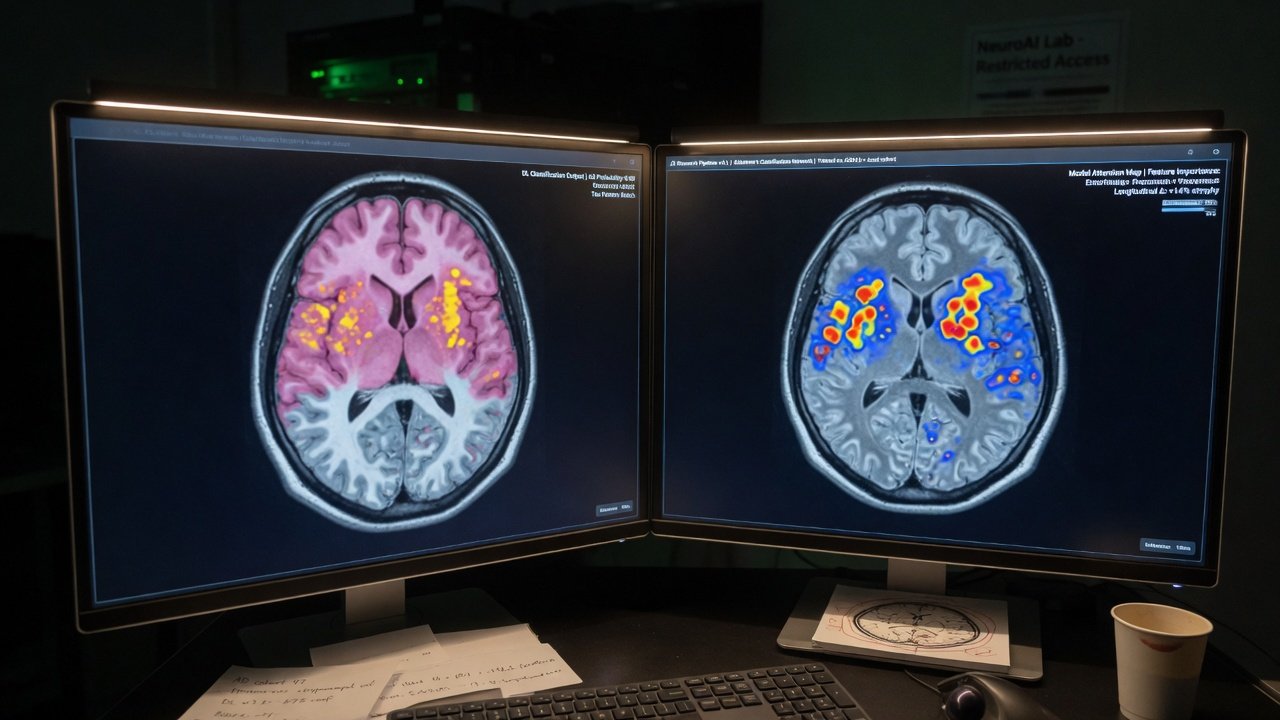
Featured image: AI-generated conceptual editorial image – not from the cited study / not a clinical photograph. تصویر: مصنوعی ذہانت سے تیار کردہ تصویری اداریہ — حوالہ شدہ تحقیق سے نہیں / کلینیکل فوٹو نہیں۔
Read the source → | اصل ماخذ پڑھیں ←
Educational digest only — not personal medical advice, not a diagnosis, and not a treatment recommendation. Discuss decisions with your treating clinician. یہ صرف تعلیمی خلاصہ ہے — ذاتی طبی مشورہ، تشخیص یا علاج کی سفارش نہیں۔ فیصلے اپنے معالج سے کریں۔

