
 AI WhatsApp 0300 087 4232

stroke ·Level of evidence: Preclinical/animal
Resetting the body clock could help the brain recover after stroke
2026
Scientific core
According to the ScienceDaily summary, reinforcing natural daily (circadian) rhythms helped mice recover after stroke. Reported mechanisms included better brain waste-clearing function and less lingering inflammation. The approach was said to help even when started three days after stroke, a time window that is educationally relevant because many acute cytoprotective ideas fail outside hyper-acute care. Stroke recovery biology—glymphatic/clearance pathways, inflammation, sleep and circadian integrity—is a growing research theme alongside reperfusion and secondary prevention. This remains animal evidence only: species differences, stroke models, and outcome measures limit direct clinical translation. It should not be read as a recommendation for any specific light, sleep, or drug protocol in humans. For neurosurgeons and stroke clinicians, the human-impact bridge is the concept that subacute recovery environments might one day complement EVT, thrombolysis, and rehab, pending rigorous clinical trials. No human efficacy or safety data are provided in the feed item.
Frame as subacute recovery biology after stroke, complementary in concept to reperfusion—not a competing acute therapy. Do not extrapolate dosing, light schedules, or pharmacologic circadian agents from mouse work. Await controlled human studies before pathway or discharge-education changes.
In mice, supporting the body’s natural day–night rhythm was linked with better healing biology after stroke. This is early animal research. People should not start special therapies from this headline alone.
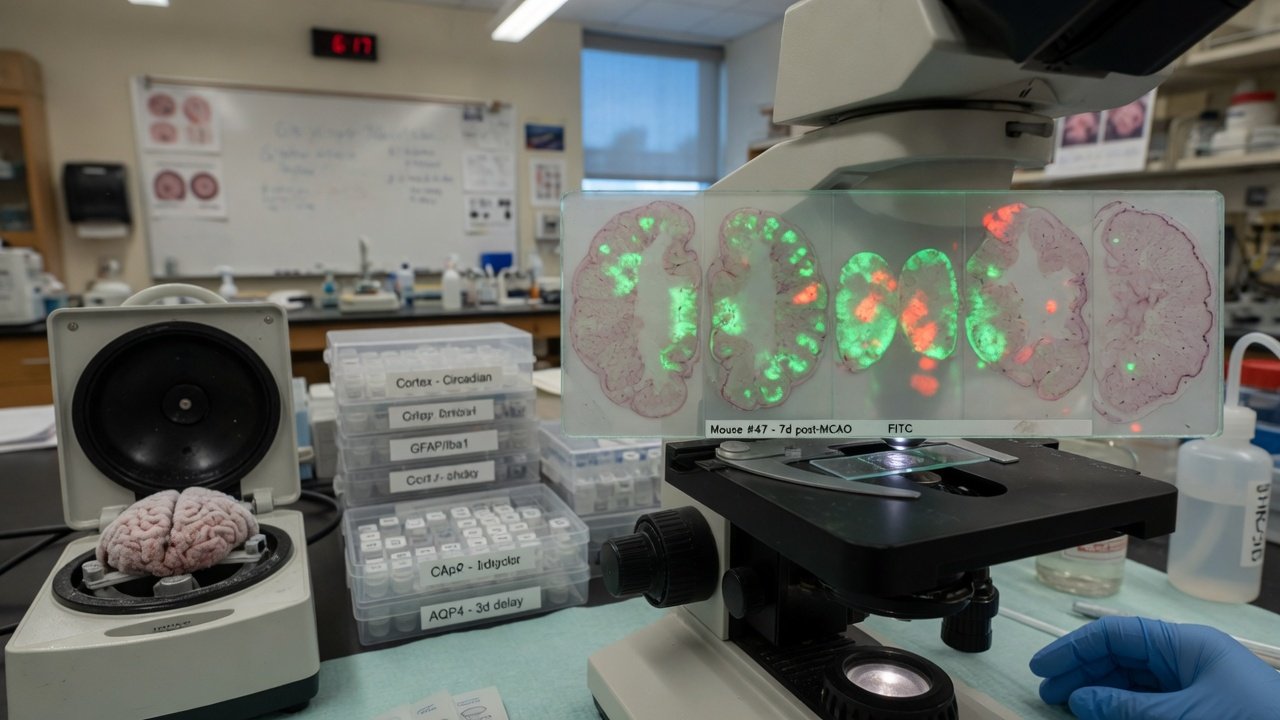
Featured image: AI-generated conceptual editorial image – not from the cited study / not a clinical photograph. تصویر: مصنوعی ذہانت سے تیار کردہ تصویری اداریہ — حوالہ شدہ تحقیق سے نہیں / کلینیکل فوٹو نہیں۔
Educational digest only — not personal medical advice, not a diagnosis, and not a treatment recommendation. Discuss decisions with your treating clinician. یہ صرف تعلیمی خلاصہ ہے — ذاتی طبی مشورہ، تشخیص یا علاج کی سفارش نہیں۔ فیصلے اپنے معالج سے کریں۔
AI WhatsApp: 0300 087 4232 — booking & PA assistant
AI booking & PA assistant — appointments and a brief note on lab reports. Does not diagnose. Does not interpret imaging for patients. Emergencies escalate to the doctor. AI limits & privacy
Emergency — direct Dr Wasif: 0345 825 4232 (not for routine booking)
