
 AI WhatsApp 0300 087 4232

cognition ·Level of evidence: Observational human cohort
MIT neuroscientists discover the brain can reason without words
ScienceDaily (secondary report; primary journal not specified in feed)
Scientific core
According to a secondary report of MIT-led human neuroscience work, language processing and logical reasoning appear to rely on separable brain systems. Adults with severe language impairment after stroke performed challenging logic problems at levels comparable to people without those impairments, while imaging suggested language-related cortex was largely quiet during reasoning tasks. This aligns with a broader cognitive-neuroscience view that inner speech is not strictly required for all forms of abstract problem-solving. The feed item does not detail lesion mapping criteria, puzzle types, sample size, statistics, or confounds (for example education, hemiparesis, or attention), so interpretation must await the primary paper. Educationally, the finding cautions against equating aphasia with global loss of intellect and supports careful domain-specific cognitive assessment after focal brain injury. It does not claim that language never interacts with reasoning in everyday life.
Stroke, trauma, and tumor teams should separate aphasia from reasoning capacity when counseling families and planning rehab or return-to-activity discussions. Neurosurgery and neurology trainees can use this as a reminder to test language, executive function, and nonverbal reasoning as distinct domains. Medical students should connect classical language networks with association networks that support logic, while remembering secondary news is not a practice guideline.
New research suggests people can still solve many logic problems even when stroke has badly affected language. Difficulty speaking or understanding words does not automatically mean a person cannot think or reason. Individual abilities vary; only a clinical evaluation can describe a specific person’s strengths and needs.
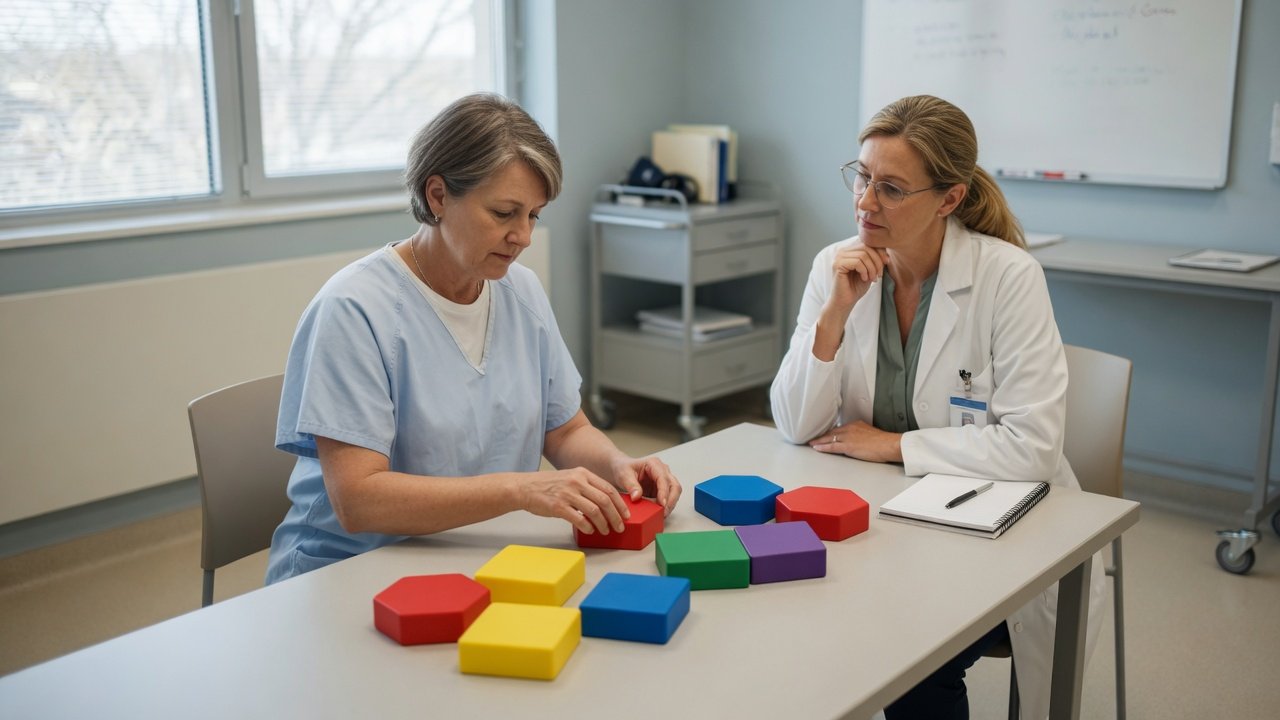
Featured image: AI-generated conceptual editorial image – not from the cited study / not a clinical photograph.
Educational digest only — not personal medical advice, not a diagnosis, and not a treatment recommendation. Discuss decisions with your treating clinician.
AI WhatsApp: 0300 087 4232 — booking & PA assistant
AI booking & PA assistant — appointments and a brief note on lab reports. Does not diagnose. Does not interpret imaging for patients. Emergencies escalate to the doctor. AI limits & privacy
Emergency — direct Dr Wasif: 0345 825 4232 (not for routine booking)
