0300 087 4232
META TITLE: Lumbar Disc Herniation Pakistan: Operate or Wait?
META DESCRIPTION: Lumbar disc herniation Pakistan guide: when to operate vs wait. Evidence-based advice from neurosurgeon Dr. Wasif Rizwan Malik on red flags, SPORT data & recovery.
Lumbar disc herniation: when to operate and when to wait
Author: Dr. Wasif Rizwan Malik | MBBS, FCPS (Neurosurgery) | PMDC 47983-P | Consultant Neurosurgeon, Faraz Hospital, Dubai Mahal Chowk, Bahawalpur
Book Consultation: WhatsApp +923458254232 | Faraz Hospital, Bahawalpur
Introduction
Most patients with lumbar disc herniation and sciatica improve substantially without an operation. High-quality data show that 60–90% report meaningful reductions in leg pain and gains in function within 6–12 weeks of structured conservative care. In Pakistan, delayed specialist access, out-of-pocket costs, and late presentation with advanced deficits remain common realities that shape decision-making. The central clinical question is therefore not “surgery or never,” but “when is surgery clearly beneficial and when is watchful waiting the safer, evidence-supported first step?” This article summarises natural history, red flags, guideline thresholds, and practical pathways used at Faraz Hospital so patients and families can make informed choices about lumbar disc Pakistan care.
What is it?
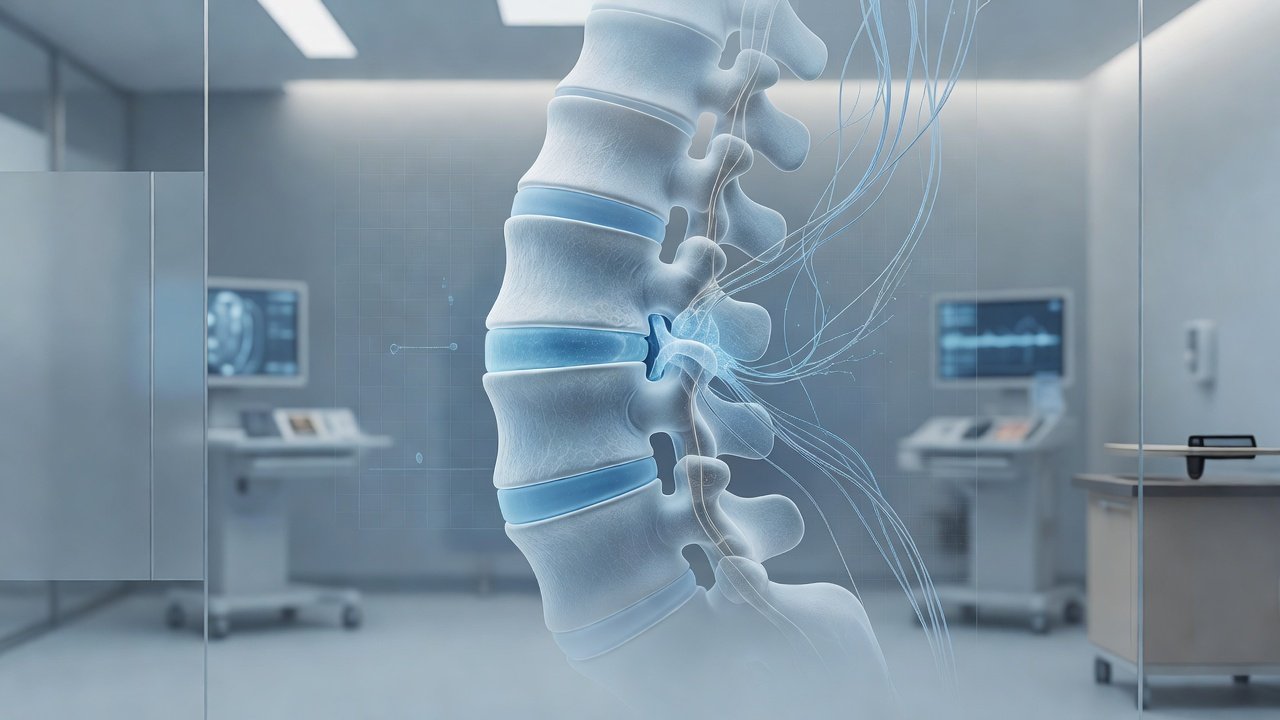
Lumbar disc herniation (LDH) occurs when the soft nucleus pulposus of an intervertebral disc pushes through a tear in the tougher outer annulus and compresses or inflames a nearby lumbar nerve root. The result is radiculopathy—pain, numbness, or weakness that radiates into the buttock and leg, classically called sciatica when the S1 or L5 root is involved. Herniations are most frequent at L4–L5 and L5–S1. Importantly, the size of the herniation on MRI does not always correlate with symptom severity; many large fragments resorb over months through natural inflammatory and phagocytic processes. Understanding this biology underpins the “wait” strategy for uncomplicated cases and explains why early imaging alone should not drive operative decisions in lumbar disc Pakistan practice.
Causes
Age-related disc degeneration, repetitive flexion-loading, sudden heavy lifting, smoking, obesity, and genetic predisposition all contribute. In the Pakistani context, prolonged sitting (drivers, office workers), manual labour, and limited workplace ergonomics accelerate annular tears. Trauma is less common than cumulative micro-injury. Once the nucleus extrudes, chemical irritation from inflammatory mediators (TNF-α, interleukins) often produces more pain than pure mechanical compression—another reason many patients improve as the acute inflammatory phase settles.
Symptoms – bold red flags
Typical LDH produces unilateral leg pain worse than back pain, positive straight-leg raise, sensory changes in a dermatomal distribution, and possible mild weakness (e.g., foot dorsiflexion or plantarflexion). Most of these features improve with time.
Red flags that demand urgent evaluation and often surgery:
– Cauda equina syndrome (CES): saddle anaesthesia, new bowel/bladder dysfunction, bilateral leg symptoms, or progressive bilateral weakness—surgical emergency.
– Progressive motor deficit: objectively worsening foot drop or other myotomal weakness over days.
– Intractable pain preventing sleep or basic mobility despite maximal analgesia.
– Systemic signs suggesting infection or tumour (fever, night pain, unexplained weight loss, history of cancer).
Any of these in a patient with suspected lumbar disc Pakistan presentation warrants same-day imaging and neurosurgical review.
Diagnosis at Faraz Hospital
Evaluation begins with a focused neurological examination documenting motor power, reflexes, sensation, and gait. Red-flag symptoms trigger immediate MRI (or BodyTom CT when MRI is unavailable or contraindicated). We correlate imaging with the clinical level; asymptomatic disc bulges are ignored. Electrodiagnostics are used selectively when the diagnosis is unclear. At Faraz Hospital we emphasise shared decision-making: patients see their own scans, understand natural history data, and receive a written plan that balances evidence with local resource realities.
Treatment
When to wait: For typical radiculopathy without red flags, guidelines (AANS/CNS and NICE NG59) endorse at least 6 weeks of optimised non-operative care—activity modification, physiotherapy emphasising extension and core control, short-course NSAIDs, and selective epidural steroid injections. The majority improve. The SPORT trial (Weinstein et al.) and the Dutch sciatica RCT (Peul et al.) demonstrated that early surgery accelerates relief of leg pain, yet by 1–2 years pain and disability scores largely converge with continued conservative management for many patients. Long-term observational data (Atlas et al.) reinforce that carefully selected non-operative patients can achieve durable outcomes.
When to operate: Absolute indications are CES and progressive neurological deficit. Relative indications include persistent, function-limiting radiculopathy after an adequate ≥6-week non-operative trial and patient preference after informed discussion of faster short-term relief versus surgical risks (recurrence 5–15%, reoperation, rare infection or instability).
At Faraz Hospital, microdiscectomy is performed with a Zeiss operating microscope for precise nerve-root decompression and minimal soft-tissue disruption. Intra-operative BodyTom CT is available when real-time confirmation of level or residual fragment is required. Technique selection (standard microdiscectomy versus tubular) is individualised. In resource-constrained settings we prioritise early triage of red flags while avoiding unnecessary early surgery for resolving sciatica—balancing evidence with Pakistani healthcare access patterns.
Recovery
After microdiscectomy most patients mobilise the same day and leave hospital within 24–48 hours. Leg pain often improves dramatically; residual numbness or mild weakness may recover over weeks to months. Physiotherapy begins early with walking and gradual core strengthening. Return to desk work is commonly 2–4 weeks; heavier labour 6–12 weeks. Recurrence risk is discussed openly. Conservative-care patients follow a structured 6–12-week programme with clear “failure” criteria that trigger re-imaging and surgical reconsideration. Long-term spine health (weight control, smoking cessation, ergonomics) remains essential regardless of pathway.
FAQ
1. How long should I try physiotherapy before considering surgery for lumbar disc herniation in Pakistan?
Most guidelines support a minimum of 6 weeks of optimised non-operative care unless red flags appear.
2. Is surgery always better for faster relief?
Early surgery shortens the duration of severe leg pain for selected patients, but longer-term outcomes often equalise; shared decision-making is key.
3. What is the recurrence rate after discectomy?
Approximately 5–15% depending on technique, patient factors, and follow-up length.
4. Can a large disc herniation heal without surgery?
Yes—many extrusions resorb spontaneously; clinical correlation, not size alone, guides treatment.
5. When is cauda equina syndrome a concern?
New bladder/bowel change, saddle numbness, or progressive bilateral weakness requires emergency neurosurgical assessment.
Conclusion + CTA
For uncomplicated lumbar disc herniation, evidence supports waiting with high-quality conservative care for at least six weeks; operate promptly for cauda equina syndrome, progressive deficit, or failed adequate non-operative management. In Pakistan, early recognition of red flags and timely specialist access remain the highest-yield interventions. Individualise every decision with examination, imaging, and patient values.
Book Consultation: WhatsApp +923458254232 | Faraz Hospital, Dubai Mahal Chowk, Bahawalpur.
Dr. Wasif Rizwan Malik | MBBS, FCPS (Neurosurgery) | PMDC 47983-P | Consultant Neurosurgeon, Faraz Hospital, Bahawalpur.
References
– Weinstein JN, et al. Surgical vs nonoperative treatment for lumbar disk herniation: the Spine Patient Outcomes Research Trial (SPORT). JAMA. 2006;296(20):2451-2459. PMID: 17135583.
– Peul WC, et al. Surgery versus prolonged conservative treatment for sciatica. N Engl J Med. 2007;356(22):2245-2256. PMID: 17855690.
– Atlas SJ, et al. Long-term outcomes of surgical and nonsurgical management of sciatica secondary to a lumbar disc herniation: 10-year results from the Maine Lumbar Spine Study. Spine. 2005;30(8):927-935. PMID: 15564907.
Disclaimer: This article is educational only and does not constitute personalised medical advice. Diagnosis and treatment decisions require individual clinical assessment by a qualified physician.
Published by: Dr. Wasif Rizwan Malik
Credentials: MBBS, FCPS (Neurosurgery), PMDC 47983-P