
 0300 087 4232
Andromeda Special · This Week in Neurosurgery
Elevated bilingual briefing — estimating stroke onset time from non-contrast CT with censoring-aware AI that tolerates uncertain infarct outlines (translational imaging).
اینڈرو میڈا سپیشل — سادہ سی ٹی سے فالج شروع ہونے کا وقت اندازہ لگانے والی مصنوعی ذہانت (انفارکٹ کی غیر یقینی حدود کو سنبھالتے ہوئے)۔
stroke · Level of evidence: Translational/early clinical
Stroke onset time estimation from NCCT with censoring-aware learning and robustness to infarct segmentation uncertainty
Scientific Reports · 2026
سادہ سی ٹی سے فالج شروع ہونے کا وقت اندازہ: انفارکٹ کی غیر یقینی حدود کو سنبھالتے مصنوعی ذہانت کے طریقے
Scientific core · سائنسی خلاصہ
Unknown symptom-onset time still limits thrombolysis and other time-critical stroke decisions when patients wake with deficits or cannot give a history. This work focuses on estimating stroke onset time from non-contrast CT (NCCT), using censoring-aware learning and aiming for robustness when infarct segmentation is uncertain. NCCT is the most widely available first-line brain scan worldwide, so reliable onset-time imaging biomarkers could widen access beyond centers with advanced MRI or perfusion CT. Methodologically, the paper targets two practical failure modes: censored or incomplete time labels and variability in how infarct is outlined on CT. This remains translational computational work: clinical adoption would require prospective validation, calibration across scanners, and proof that estimates change management safely without increasing hemorrhage risk. For EVT- and thrombolysis-capable teams, onset-time estimation research is directly tied to expanding treatment eligibility in unwitnessed stroke.
جب مریض نیند سے نقصان کے ساتھ جاگے یا تاریخ نہ بتا سکے تو علامات کے شروع ہونے کا نامعلوم وقت تھرومبولائسز اور دیگر فوری فالج فیصلوں کو محدود کر دیتا ہے۔ یہ کام نان کنٹراسٹ سی ٹی (NCCT) سے فالج کے آغاز کا وقت اندازہ کرنے پر مرکوز ہے، جس میں سنسرنگ سے آگاہ لرننگ اور انفارکٹ سیگمنٹیشن کی غیر یقینی صورت میں مضبوطی مقصود ہے۔ NCCT دنیا بھر میں سب سے عام پہلی دماغی اسکین ہے، اس لیے قابل اعتماد آغاز-وقت بائیو مارکر پیشرفته MRI یا پرفیوزن سی ٹی والے مراکز سے آگے رسائی بڑھا سکتے ہیں۔ طریقہ کار دو عملی مسائل پر ہے: نامکمل وقت کی لیبلز اور سی ٹی پر انفارکٹ کی حد بندی میں فرق۔ یہ ترجمہ جاتی کمپیوٹیشنل کام ہے؛ کلینیکل اپنانے کے لیے مستقبل کی تصدیق، مختلف اسکینرز پر کیلیبریشن، اور یہ ثبوت چاہیے کہ اندازہ انتظام کو محفوظ طریقے سے بدلتا ہے بغیر خون بہنے کا خطرہ بڑھائے۔ EVT اور تھرومبولائسز ٹیموں کے لیے یہ تحقیق بغیر گواہ والے فالج میں علاج کی اہلیت سے براہ راست جڑی ہے۔
Frame this as decision-support research for unwitnessed or wake-up stroke, not as a ready replacement for DWI-FLAIR mismatch or guideline clocks. Ask how the model behaves with early ischemic change, old infarcts, motion, and different CT vendors. Any bedside use must sit inside existing thrombolysis/EVT pathways with human override and hemorrhage-safety monitoring.
اسے بغیر گواہ یا ویک-اپ فالج کے لیے فیصلہ معاون تحقیق سمجھیں، DWI-FLAIR عدم مطابقت یا رہنما گھڑیوں کا تیار متبادل نہیں۔ دیکھیں ماڈل ابتدائی اسکیمک تبدیلی، پرانے انفارکٹ، حرکت اور مختلف سی ٹی مشینوں پر کیسا رہتا ہے۔ کسی بھی بستر کے استعمال کو موجودہ تھرومبولائسز/EVT راستوں میں انسانی نگرانی اور خون بہنے کی حفاظت کے ساتھ رکھنا ہوگا۔
Doctors sometimes cannot tell exactly when a stroke began, which affects emergency treatment choices. Researchers are testing whether ordinary CT brain scans plus careful computer methods can help estimate timing. This is developing technology and does not change what patients should do in an emergency: seek immediate stroke care.
کبھی ڈاکٹروں کو درست معلوم نہیں ہوتا فالج کب شروع ہوا، جو ایمرجنسی علاج کے انتخاب پر اثر ڈالتا ہے۔ محققین جانچ رہے ہیں کہ عام دماغی سی ٹی اور محتاط کمپیوٹر طریقے وقت کا اندازہ کرنے میں مدد دے سکتے ہیں۔ یہ ابھی ترقی پذیر ٹیکنالوجی ہے اور ایمرجنسی میں مریضوں کے عمل کو نہیں بدلتی: فوراً فالج کی دیکھ بھال حاصل کریں۔
NCCT-only tools are especially relevant for resource-variable stroke networks across Pakistan and similar settings where MRI or perfusion CT may be delayed or unavailable.
صرف NCCT پر مبنی اوزار پاکستان اور ملتے جلتے وسائل والے فالج نیٹ ورکس کے لیے خاص طور پر اہم ہیں جہاں MRI یا پرفیوزن سی ٹی میں تاخیر یا عدم دستیابی ہو سکتی ہے۔
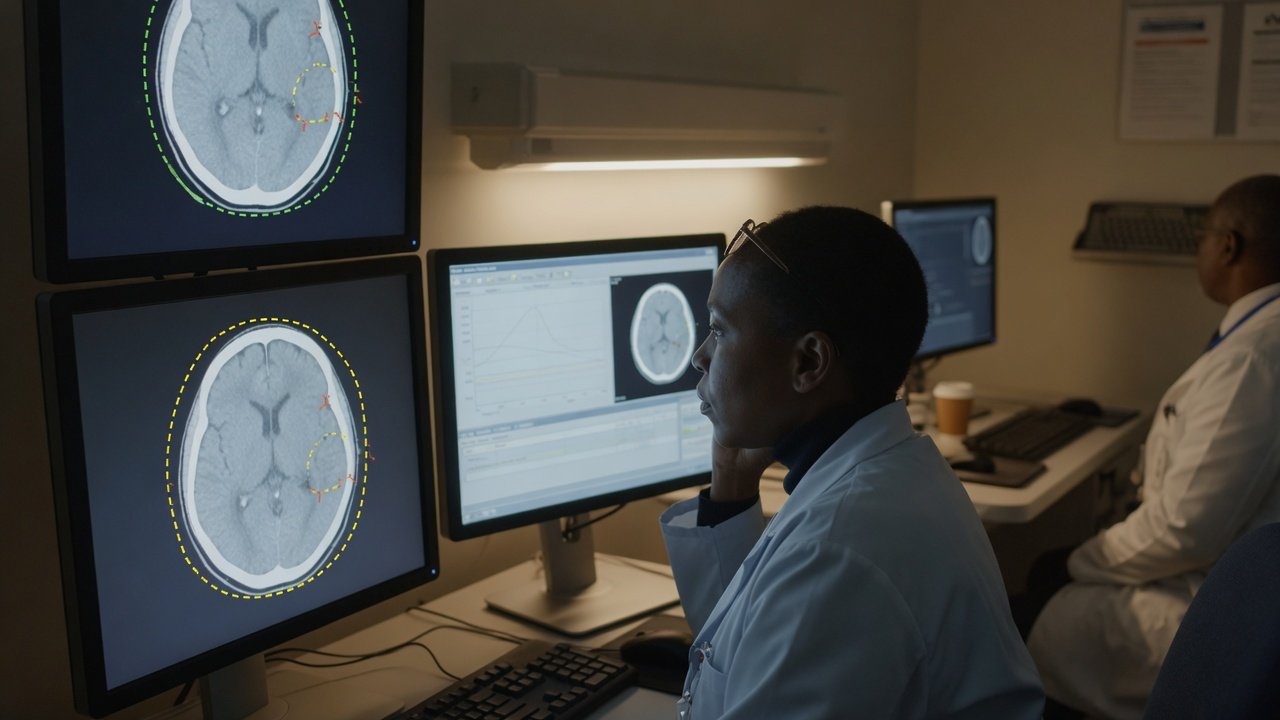
Featured image: AI-generated conceptual editorial image – not from the cited study / not a clinical photograph. تصویر: مصنوعی ذہانت سے تیار کردہ تصویری اداریہ — حوالہ شدہ تحقیق سے نہیں / کلینیکل فوٹو نہیں۔
Read the source → | اصل ماخذ پڑھیں ←
Educational digest only — not personal medical advice, not a diagnosis, and not a treatment recommendation. Discuss decisions with your treating clinician. یہ صرف تعلیمی خلاصہ ہے — ذاتی طبی مشورہ، تشخیص یا علاج کی سفارش نہیں۔ فیصلے اپنے معالج سے کریں۔
