
 0300 087 4232
neurosurgery · Level of evidence: Translational/early clinical
Scientists discover a hidden brain rhythm that could improve Parkinson’s treatment
ScienceDaily (secondary report; primary journal not specified in feed) · 2026
پارکنسنز میں ڈیپ برین اسٹیمولیشن کے فائدے سے منسلک دماغی نیٹ ورک کی تال
Scientific core · سائنسی خلاصہ
A secondary science report describes work identifying a brain network and a distinctive electrical rhythm that appear to support clinical benefit from deep brain stimulation (DBS) in Parkinson’s disease. DBS is an established neurosurgical therapy for selected patients with motor fluctuations or tremor, yet programming remains partly empirical and outcomes vary. Mapping which circuit signatures track improvement could refine target engagement, contact selection, and stimulation parameters toward more personalized settings. The feed summary does not provide sample size, recording modality (for example intraoperative or chronic sensing), primary endpoints, or effect sizes, so claims should be treated as hypothesis-generating until the primary peer-reviewed methods and results are reviewed. For trainees, the educational bridge is circuit-level thinking: motor benefit is not only anatomic lead location but also dynamic network physiology. Clinicians should await full primary data before changing standard DBS workflows.
ایک سائنسی رپورٹ میں ایسا دماغی نیٹ ورک اور ایک مخصوص برقی تال بیان کی گئی ہے جو پارکنسنز کی بیماری میں ڈیپ برین اسٹیمولیشن (DBS) کے کلینیکل فائدے سے وابستہ معلوم ہوتی ہے۔ DBS منتخب مریضوں کے لیے تسلیم شدہ نیورو سرجیکل علاج ہے، مگر پروگرامنگ اب بھی جزوی طور پر تجربے پر منحصر رہتی ہے اور نتائج مختلف ہو سکتے ہیں۔ اگر بہتری سے جڑی سرکٹ علامات واضح ہوں تو ٹارگٹ، کانٹیکٹ انتخاب اور اسٹیمولیشن پیرامیٹرز زیادہ ذاتی ہو سکتے ہیں۔ فیڈ میں نمونہ سائز، ریکارڈنگ کا طریقہ، بنیادی اینڈ پوائنٹس یا اثر کی مقدار نہیں دی گئی، اس لیے دعوے ابتدائی ہیں جب تک اصل تحقیقی مقالہ نہ دیکھا جائے۔ تربیت کے لیے اہم بات یہ ہے کہ فائدہ صرف لیڈ کی اناٹومی نہیں بلکہ نیٹ ورک کی فزیالوجی بھی ہے۔ معمول کے DBS طریقہ کار بدلنے سے پہلے مکمل شائع شدہ ثبوت درکار ہیں۔
For neurosurgeons, neurologists, and residents, this reinforces physiology-guided DBS: network rhythms may complement imaging and macrostimulation when optimizing leads and programs. Students should link basal-ganglia–thalamocortical loops to why sensing-enabled systems and adaptive strategies are research priorities. Do not alter consent, targeting, or programming solely on secondary coverage; appraise the primary study’s design, controls, and generalizability.
نیورو سرجنز، نیورولوجسٹس اور ریزیڈنٹس کے لیے یہ بات اہم ہے کہ DBS میں نیٹ ورک کی تال امیجنگ اور میکرو اسٹیمولیشن کے ساتھ معاون ہو سکتی ہے۔ طلبہ کو بیسل گینگلیا–تھیلمو کارٹیکل لوپس اور سینسنگ/اڈاپٹو تحقیق کی وجہ سمجھنی چاہیے۔ صرف ثانوی خبر کی بنیاد پر رضامندی، ٹارگٹنگ یا پروگرامنگ نہ بدلیں؛ اصل مطالعے کا ڈیزائن اور حدود ضرور پرکھیں۔
Researchers are studying brain electrical patterns that may help explain why deep brain stimulation helps some people with Parkinson’s disease. This is early scientific news, not a new guaranteed treatment. Care decisions still depend on a full specialist assessment and established guidelines.
محققین دماغ کی برقی لہروں کا مطالعہ کر رہے ہیں جو یہ سمجھانے میں مدد دے سکتی ہیں کہ کچھ پارکنسنز کے مریضوں میں ڈیپ برین اسٹیمولیشن کیوں فائدہ مند ہوتی ہے۔ یہ ابتدائی سائنسی خبر ہے، کوئی نیا یقینی علاج نہیں۔ فیصلے اب بھی ماہر معائنے اور تسلیم شدہ ہدایات پر منحصر ہیں۔
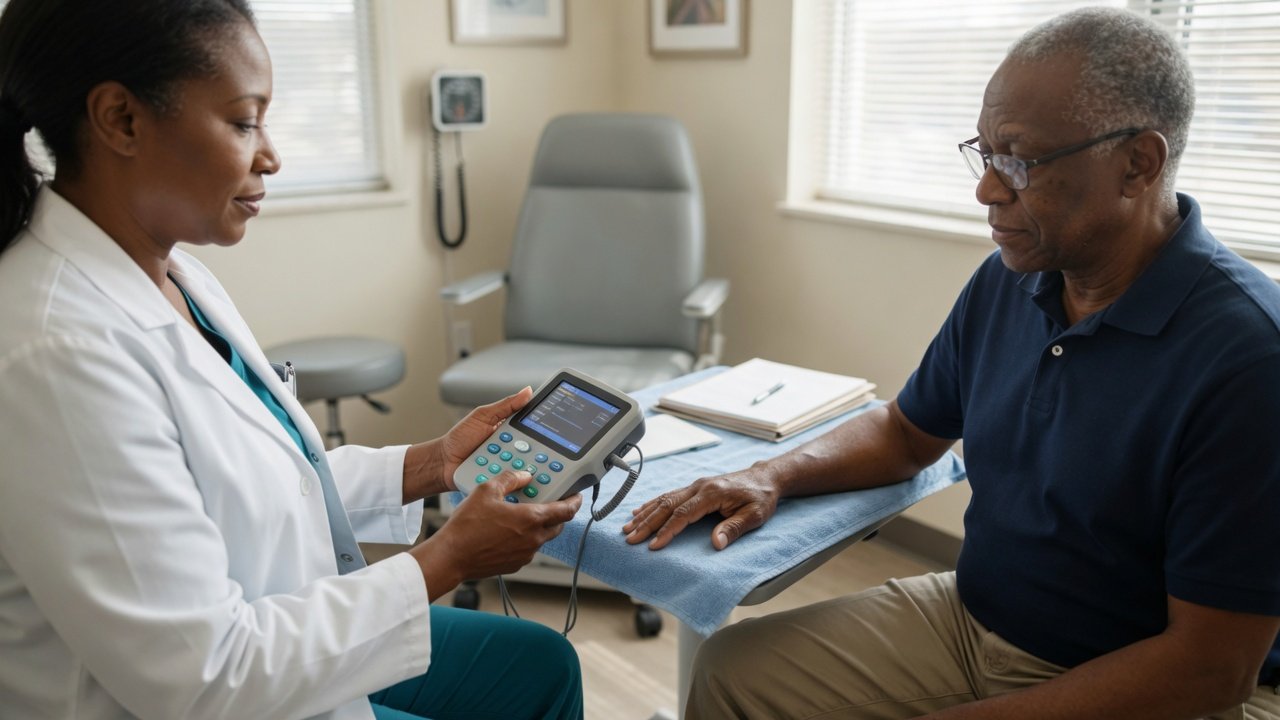
Featured image: AI-generated conceptual editorial image – not from the cited study / not a clinical photograph. تصویر: مصنوعی ذہانت سے تیار کردہ تصویری اداریہ — حوالہ شدہ تحقیق سے نہیں / کلینیکل فوٹو نہیں۔
Read the source → | اصل ماخذ پڑھیں ←
Educational digest only — not personal medical advice, not a diagnosis, and not a treatment recommendation. Discuss decisions with your treating clinician. یہ صرف تعلیمی خلاصہ ہے — ذاتی طبی مشورہ، تشخیص یا علاج کی سفارش نہیں۔ فیصلے اپنے معالج سے کریں۔
