
 0300 087 4232
cognition · Level of evidence: Translational/early clinical
Preliminary validation of Cogniclear: a virtual reality cognitive screening tool for older adults against the Montreal Cognitive Assessment
Scientific Reports · 2026
بزرگوں میں موکا کے مقابلے میں کاگنی کلیئر وی آر ذہنی اسکریننگ کی ابتدائی توثیق
Scientific core · سائنسی خلاصہ
This report describes preliminary validation of Cogniclear, a virtual reality–based cognitive screening tool intended for older adults, benchmarked against the Montreal Cognitive Assessment (MoCA). MoCA remains a widely used brief screen for mild cognitive impairment and related concerns in clinical and research settings, but access, standardization of administration, and engagement can vary. A VR format aims to present structured cognitive tasks in an immersive environment that may support more consistent stimulus delivery and potentially richer behavioral capture than paper-based testing alone. As a preliminary validation study, the work focuses on how Cogniclear scores or task performance relate to MoCA performance rather than on long-term clinical outcomes, diagnosis replacement, or treatment effects. Such early human validation is a necessary step before any tool can be considered for broader clinical pathways, triage, or longitudinal monitoring. Limitations typical of this stage include sample scope, generalizability across education and language groups, technical usability in frail patients, and the need for independent replication. For neurosurgery and neurology services, interest lies in whether scalable digital screens could eventually complement—not replace—established bedside assessment and full neuropsychological evaluation when cognitive status affects consent, surgical risk discussion, or rehabilitation planning.
اس رپورٹ میں کاگنی کلیئر نامی ورچوئل ریئلٹی پر مبنی ذہنی اسکریننگ ٹول کی ابتدائی توثیق بیان کی گئی ہے، جو بزرگ افراد کے لیے سوچی گئی ہے اور مونٹریال شناختی تشخیص (MoCA) سے موازنہ کی گئی ہے۔ موکا ہلکی ذہنی کمزوری اور متعلقہ مسائل کے لیے کلینیکل اور تحقیقی استعمال میں ایک عام مختصر اسکرین ہے، مگر رسائی، یکساں طریقۂ کار، اور مریض کی شمولیت مختلف ہو سکتی ہے۔ وی آر شکل منظم ذہنی مشقوں کو ایک غوطہ خیز ماحول میں پیش کرنے کی کوشش کرتی ہے تاکہ محرکات کی فراہمی زیادہ مستقل ہو اور کاغذی ٹیسٹ کے مقابلے میں رویے کی اضافی معلومات ممکن ہوں۔ چونکہ یہ ابتدائی توثیقی مطالعہ ہے، توجہ کاگنی کلیئر کی کارکردگی اور موکا کے تعلق پر ہے، نہ کہ طویل مدتی نتائج، تشخیص کی جگہ لینے، یا علاج کے اثرات پر۔ وسیع کلینیکل استعمال سے پہلے ایسے انسانی مراحل ضروری ہیں۔ اس مرحلے کی عام حدود میں نمونے کی وسعت، تعلیم و زبان کے گروہوں میں عمومیت، کمزور مریضوں میں استعمال کی آسانی، اور آزاد تصدیق کی ضرورت شامل ہیں۔ نیورو سرجری اور نیورولوجی کے لیے دلچسپی اس بات میں ہے کہ ڈیجیٹل اسکرینز eventual طور پر روایتی معائنے اور مکمل نیورو سائیکولوجیکل جانچ کے ساتھ معاون ہو سکتی ہیں جب ذہنی حالت رضامندی، سرجری کے خطرے، یا بحالی کی منصوبہ بندی پر اثر انداز ہو۔
Treat this as early tool validation against MoCA, not as a new diagnostic standard or surgical selection instrument. If VR screening enters your pathway later, demand local normative data, usability in older and post-operative patients, and clear escalation rules to formal neuropsychology. Cognitive status already influences consent capacity discussions, elective spine and cranial risk counseling, and discharge planning—any digital screen must be interpreted beside clinical exam and imaging context.
اسے موکا کے مقابلے میں ابتدائی ٹول توثیق سمجھیں، نیا تشخیصی معیار یا سرجیکل انتخاب کا آلہ نہیں۔ اگر وی آر اسکریننگ بعد میں آپ کے نظام میں آئے تو مقامی معیاری ڈیٹا، بزرگ اور آپریشن کے بعد مریضوں میں استعمال، اور مکمل نیورو سائیکولوجی کی طرف واضح حوالہ قواعد طلب کریں۔ ذہنی حالت پہلے ہی رضامندی، انتخابی کرینیل/سپائن مشورے، اور ڈسچارج پر اثر ڈالتی ہے—کسی بھی ڈیجیٹل اسکرین کو کلینیکل معائنے اور امیجنگ کے ساتھ رکھ کر ہی سمجھیں۔
Researchers are testing a virtual-reality thinking check for older adults and comparing it with a common clinic test called MoCA. This is early work to see whether the new tool lines up with an existing screen. It does not by itself diagnose dementia or replace a doctor’s full assessment.
محققین بزرگوں کے لیے ورچوئل ریئلٹی پر مبنی ذہنی جانچ آزما رہے ہیں اور اس کا موازنہ کلینک کے عام ٹیسٹ موکا سے کر رہے ہیں۔ یہ ابتدائی کام ہے کہ نیا ٹول موجودہ اسکرین سے کتنا میل کھاتا ہے۔ یہ خود سے ڈیمنشیا کی تشخیص نہیں کرتا اور ڈاکٹر کے مکمل معائنے کی جگہ نہیں لیتا۔
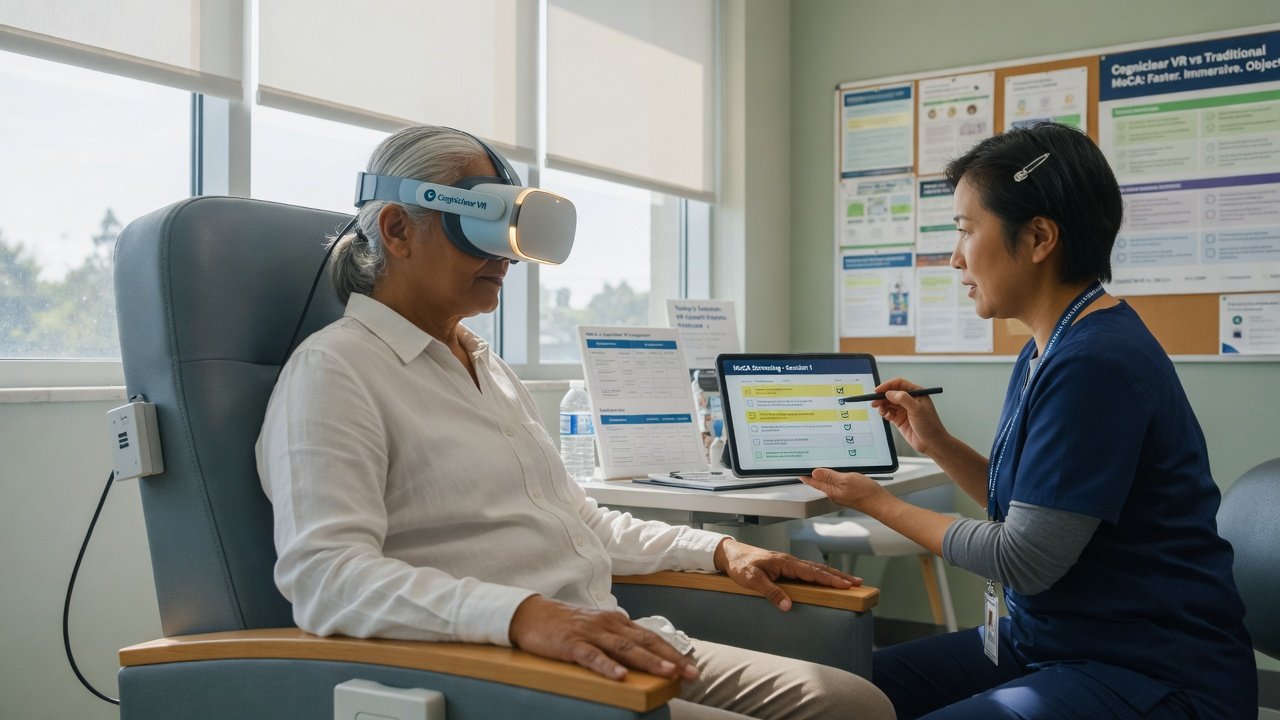
Featured image: AI-generated conceptual editorial image – not from the cited study / not a clinical photograph. تصویر: مصنوعی ذہانت سے تیار کردہ تصویری اداریہ — حوالہ شدہ تحقیق سے نہیں / کلینیکل فوٹو نہیں۔
Read the source → | اصل ماخذ پڑھیں ←
Educational digest only — not personal medical advice, not a diagnosis, and not a treatment recommendation. Discuss decisions with your treating clinician. یہ صرف تعلیمی خلاصہ ہے — ذاتی طبی مشورہ، تشخیص یا علاج کی سفارش نہیں۔ فیصلے اپنے معالج سے کریں۔
