0300 087 4232
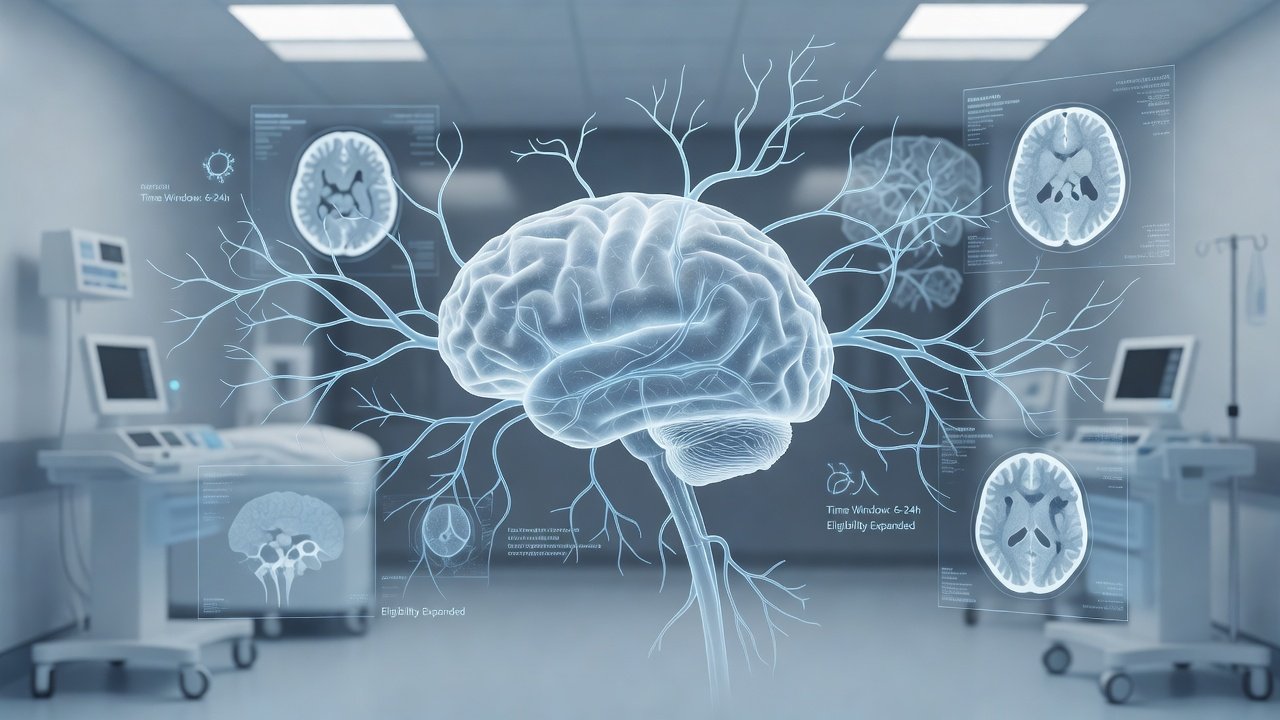
Expanding late-window stroke thrombectomy guidelines
In busy Pakistani cities, many patients with acute ischemic stroke reach hospital after the classic 6-hour window, yet modern imaging and refined trial criteria now allow carefully selected individuals to benefit from clot retrieval much later. Updated endovascular therapy standards emphasize tissue viability over the clock alone, giving clinicians a clearer path to offer stroke thrombectomy when perfusion imaging shows salvageable brain.
What changed / Why it matters
Landmark late-window trials demonstrated that patients with large-vessel occlusion and a favourable mismatch between core infarct and penumbra can achieve meaningful functional recovery with mechanical thrombectomy up to 16–24 hours from last known well. Contemporary guidelines therefore support extending endovascular therapy beyond traditional time limits when advanced CT or MR perfusion (or equivalent clinical-imaging mismatch) confirms substantial salvageable tissue and the occlusion is accessible.
For Pakistani centres this matters because traffic delays, late recognition, and transfer times frequently push arrival past six hours. Urban hospitals equipped with CT angiography and, where available, perfusion software can now triage more candidates rather than automatically excluding them on time alone. The shift reduces futile transfers while concentrating resources on patients most likely to improve. Multidisciplinary stroke pathways—rapid imaging, neuro-intervention readiness, and post-procedure critical care—remain essential; the expanded criteria do not lower the bar for technical excellence or complication avoidance. Ongoing registry data and local audit help refine patient selection in real-world South Asian populations where comorbidities and presentation patterns may differ from trial cohorts.
Patient takeaway
If you or a family member develops sudden weakness, speech difficulty, facial droop, or vision loss, seek emergency care immediately—even if several hours have already passed. Tell the team the exact time the person was last seen normal. Hospitals following current stroke thrombectomy guidance may still consider endovascular therapy after specialised scans show brain tissue that can be saved. Early arrival always gives the best chance, yet “too late” is no longer an automatic conclusion in every case. *فالج کے علامات ظاہر ہونے پر فوراً ہسپتال جائیں؛ جدید معائنے سے بعض مریضوں کا علاج روایتی وقت کے بعد بھی ممکن ہے۔*
Disclaimer
This post is for general educational purposes only and does not constitute personalised medical advice, diagnosis, or a treatment recommendation for any individual. Stroke care decisions require urgent in-person assessment by qualified clinicians using current imaging and institutional protocols. No specific surgical outcomes are claimed.
Book consultation: https://rx.drwasifmalik.com | WhatsApp +923458254232
Dr. Wasif Rizwan Malik | MBBS, FCPS (Neurosurgery) | PMDC 47983-P Consultant Neurosurgeon, Faraz Hospital, Bahawalpur
Educational only — not a substitute for clinical consultation. This daily brief is separate from the weekly Neuro Council deep-dive.
Published by: Dr. Wasif Rizwan Malik
Credentials: MBBS, FCPS (Neurosurgery), PMDC 47983-P