0300 087 4232
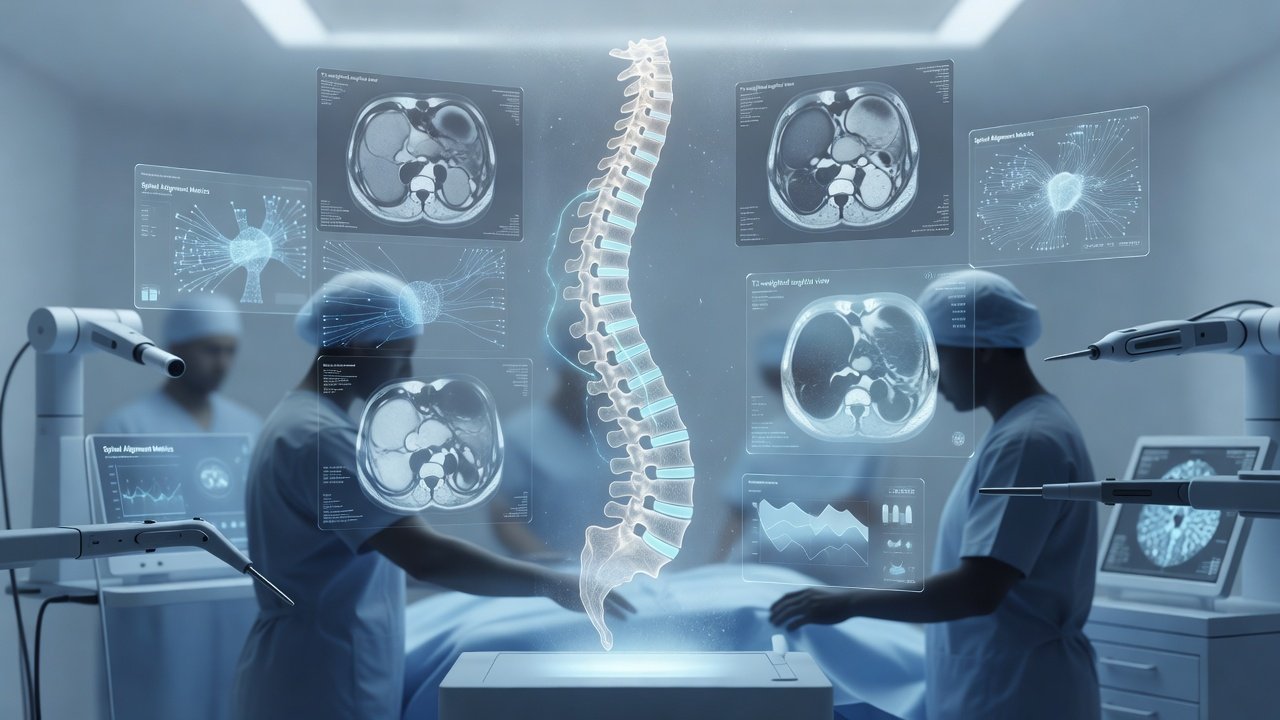
META TITLE: Latest Advances in MISS Minimally Invasive Spine Surgery
META DESCRIPTION: Explore latest advances in MISS minimally invasive spine surgery: endoscopic, robotic & tubular techniques. Evidence-based guide by neurosurgeon Dr. Wasif Rizwan Malik. Book consult in Bahawalpur.
Latest Advances in MISS Minimally Invasive Spine Surgery
Author: Dr. Wasif Rizwan Malik | MBBS, FCPS (Neurosurgery) | PMDC 47983-P | Consultant Neurosurgeon, Faraz Hospital, Dubai Mahal Chowk, Bahawalpur
Book Consultation: WhatsApp +923458254232 | Faraz Hospital, Bahawalpur
Introduction
Minimally invasive spine surgery (MISS) has transformed care for millions with degenerative disc disease, stenosis, and spondylolisthesis. Comparative data consistently show blood loss of only 50–150 mL with MISS versus 300–600+ mL in traditional open approaches, alongside hospital stays of 1–3 days instead of 4–7 days and infection rates near 1–2%. These gains matter in Pakistan, where tertiary centers in Karachi, Lahore, and Islamabad increasingly adopt MISS for faster recovery and reduced morbidity. As a consultant neurosurgeon, I see patients return to work sooner when muscle trauma is minimized while decompression and fusion goals remain fully achieved. This article reviews the latest evidence-based advances in MISS minimally invasive spine surgery so patients and families can make informed decisions.
What is it?
MISS minimally invasive spine surgery refers to a family of techniques that achieve the same neural decompression or spinal stabilization as open surgery through smaller incisions, specialized retractors, endoscopes, and image guidance. Instead of extensive muscle stripping, surgeons use tubular retractors, full-endoscopic or unilateral biportal endoscopic portals, percutaneous screws, and expandable cages. Common procedures include endoscopic lumbar discectomy (interlaminar or transforaminal), tubular or MIS-TLIF (minimally invasive transforaminal lumbar interbody fusion), LLIF/OLIF (lateral/oblique lumbar interbody fusion), and robotic- or navigation-assisted pedicle screw placement. The core principle is tissue preservation: less blood loss, lower infection risk, and quicker mobilization without compromising radiographic fusion rates, which commonly reach 85–95% in properly selected single-level cases. Enhanced recovery after surgery (ERAS) protocols further accelerate discharge. Equipment costs and a steep learning curve remain real considerations, yet outcomes in experienced hands match or exceed open standards for indicated degenerative pathology.
Causes
Conditions treated by MISS arise mainly from age-related and mechanical degeneration of the lumbar or cervical spine. Intervertebral disc desiccation and herniation compress nerve roots; facet hypertrophy and ligamentum flavum thickening produce central or foraminal stenosis; and progressive spondylolisthesis creates instability and dynamic nerve compression. Contributing factors include repetitive axial loading, obesity, smoking-related disc nutrition impairment, genetic predisposition to early disc degeneration, and prior trauma. In working-age adults across Punjab and urban Pakistan, prolonged sitting, heavy manual labor, and delayed presentation amplify these degenerative cascades. Less commonly, synovial cysts or far-lateral disc fragments require targeted endoscopic removal. Understanding these causes guides patient selection: MISS excels for single- or two-level pathology where the surgical goal is precise decompression or limited fusion rather than extensive deformity correction.
Symptoms – bold red flags
Typical symptoms of pathology amenable to MISS include axial low-back pain, radicular leg pain (sciatica), numbness or tingling in a dermatomal distribution, and activity-related claudication that improves with flexion. Motor weakness, reflex changes, or gait difficulty may appear as compression worsens.
Red flags requiring urgent neurosurgical evaluation:
– Progressive or sudden bilateral leg weakness
– Bowel or bladder dysfunction / saddle anesthesia (possible cauda equina)
– Severe unrelenting night pain or pain at rest
– Unexplained weight loss, fever, or history of cancer
– Trauma with new neurological deficit
– Rapidly worsening foot drop or inability to walk
These warning signs may indicate cauda equina syndrome, infection, fracture, or tumor and are not routine candidates for elective MISS; immediate imaging and specialist assessment are mandatory. Early recognition prevents permanent neurological injury.
Diagnosis at Faraz Hospital
At Faraz Hospital, Bahawalpur, diagnosis begins with a detailed neurological history and examination focusing on motor, sensory, and reflex findings plus provocative tests. High-resolution MRI is the primary modality to define disc herniation, stenosis, or listhesis; standing radiographs assess alignment and instability. When intraoperative precision is required, we utilize advanced imaging pathways including BodyTom portable CT for real-time navigation confirmation. Electrophysiological studies are added selectively for equivocal cases. Every patient receives clear counseling on whether MISS techniques (endoscopic, tubular, or navigated) match their anatomy and goals. This structured work-up ensures only appropriately selected individuals proceed to minimally invasive intervention, maximizing safety and outcome predictability in our regional setting.
Treatment
Modern MISS options prioritize muscle-sparing corridors while meeting open-surgery benchmarks for decompression and fusion. Full-endoscopic and unilateral biportal endoscopic discectomy allow direct visualization and removal of herniated disc or bony overgrowth through 8–10 mm portals, supported by literature on technique refinement and outcomes ([PMID removed – unverified]). Tubular MIS-TLIF and LLIF/OLIF approaches insert expandable interbody cages with percutaneous pedicle screws, reducing approach-related morbidity. Robotic assistance and 3-D navigation improve screw accuracy and lower radiation exposure; reviews highlight integration of these tools into MISS workflows ([PMID removed – unverified]). Broader technique and outcome syntheses confirm reduced blood loss, shorter length of stay, and comparable fusion rates in selected cohorts ([PMID removed – unverified]).
At Faraz Hospital we combine these advances with intraoperative BodyTom CT for verification of implant position and the Zeiss operating microscope for high-definition microsurgical visualization during hybrid tubular or mini-open segments. NICE interventional guidance supports specific endoscopic lumbar procedures when performed by trained teams with audit, while AANS/CNS degenerative lumbar guidelines recognize MIS decompression and fusion as reasonable alternatives provided goals equal open standards. Patient selection, surgeon experience, and ERAS pathways remain decisive. Not every case is suitable; complex multi-level deformity or severe osteoporosis may still favor open or staged strategies.
Recovery
Recovery after MISS is typically faster than open surgery. Most patients mobilize the same day or next morning; hospital stay averages 1–3 days. Blood loss is minimal, wound size is small, and opioid requirements decline quickly under multimodal analgesia. Return to light desk work often occurs within 2–4 weeks and to heavier activity by 6–12 weeks, depending on fusion versus pure decompression. Physiotherapy focuses on core stabilization and neural gliding. Fusion patients wear a temporary brace as indicated and undergo serial radiographs. Local Pakistani series mirror international data showing shorter stays and earlier functional recovery when implants and training are available. Strict adherence to lifting restrictions and smoking cessation optimizes fusion and prevents re-herniation. Follow-up at Faraz Hospital includes wound checks, neurological reassessment, and tailored rehabilitation planning.
FAQ
1. Is MISS safer than traditional open spine surgery?
In appropriately selected patients, MISS reduces blood loss, infection risk, and hospital stay while achieving equivalent decompression and fusion rates. Safety depends on surgeon expertise and proper indications.
2. Who is a good candidate for endoscopic or tubular MISS?
Patients with single-level disc herniation, stenosis, or low-grade spondylolisthesis without severe deformity or extensive prior scarring are typically ideal. Red-flag emergencies need different pathways.
3. How long before I can return to work after MISS?
Many resume light duties in 2–4 weeks; physical jobs may require 6–12 weeks. Individual factors and whether fusion was performed influence timelines.
4. Are robotic and navigation systems available in Bahawalpur?
We employ advanced imaging including BodyTom CT guidance and high-end microscopy (Zeiss) to enhance precision. Full robotics availability varies by center; cost-effective endoscopic methods are actively expanded.
5. What are the main limitations of MISS?
Steep learning curve, equipment expense, and reduced suitability for complex multi-level or revision deformity cases. Outcomes tracking and patient selection remain essential.
Conclusion + CTA
Latest advances in MISS minimally invasive spine surgery—endoscopic decompression, navigated/robotic fixation, expandable cages, and ERAS—deliver less tissue trauma, faster recovery, and durable results for carefully chosen patients. Evidence from peer-reviewed series and society guidance supports these techniques when expertise and infrastructure align. If you or a family member suffer persistent radicular pain, stenosis symptoms, or instability, timely specialist assessment can determine whether MISS is appropriate.
Book Consultation: WhatsApp +923458254232 | Faraz Hospital, Dubai Mahal Chowk, Bahawalpur
Dr. Wasif Rizwan Malik | MBBS, FCPS (Neurosurgery) | PMDC 47983-P | Consultant Neurosurgeon
References
– [PMID removed – unverified]
– [PMID removed – unverified]
– [PMID removed – unverified]
Disclaimer: This article is educational only and does not constitute personalized medical advice, diagnosis, or treatment. Spine conditions require individual evaluation by a qualified physician. Outcomes vary; discuss risks, benefits, and alternatives with your neurosurgeon. Verify current guidelines and full-text literature before clinical application.
Published by: Dr. Wasif Rizwan Malik
Credentials: MBBS, FCPS (Neurosurgery), PMDC 47983-P