0300 087 4232
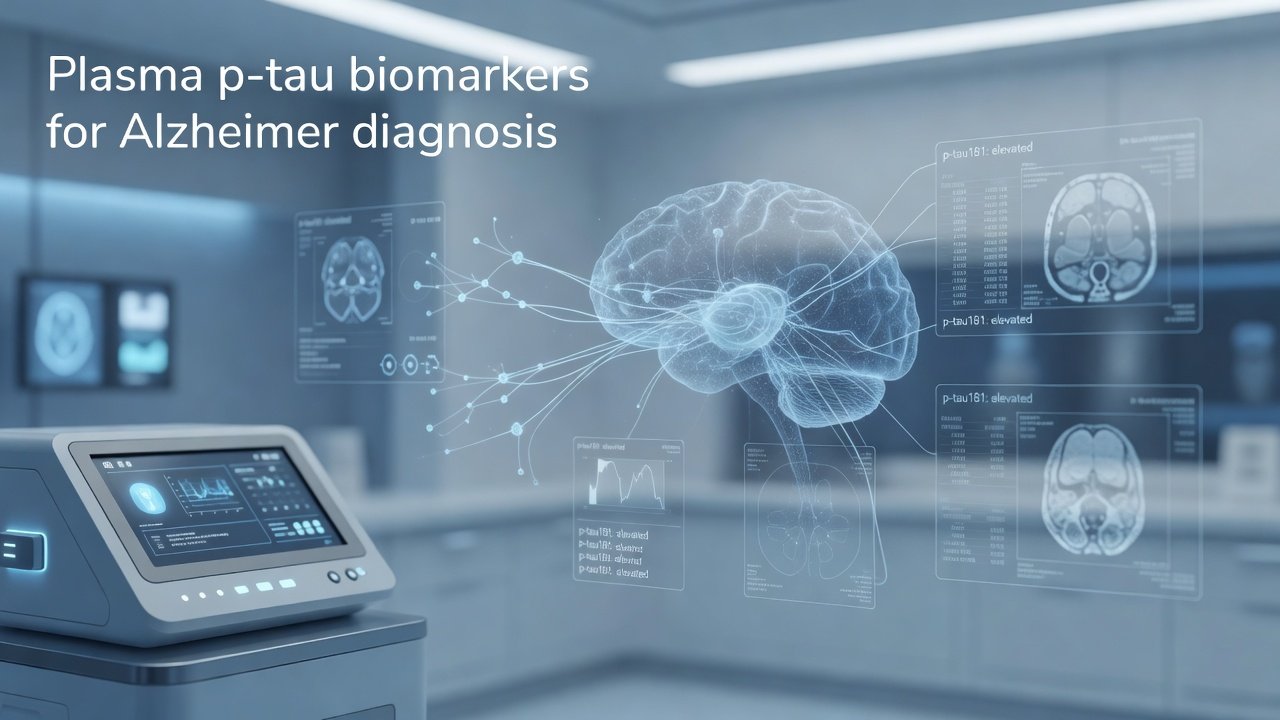
Plasma p-tau biomarkers for Alzheimer diagnosis
Blood tests that measure phosphorylated tau (p-tau) are moving Alzheimer workup closer to routine clinical practice. For Pakistani clinicians—and patients who cannot easily reach CSF analysis or amyloid PET—plasma p-tau offers a more accessible path to earlier, structured dementia evaluation when memory concerns first appear.
What changed / Why it matters
Alzheimer disease is defined biologically by amyloid plaques and tau pathology. For years, confirmation relied on cerebrospinal fluid (CSF) ratios or PET imaging—accurate but costly, invasive, and scarce outside major centres. Plasma assays for p-tau species (notably p-tau181, p-tau217, and related forms) now show strong agreement with CSF and PET in research cohorts. These blood-based Alzheimer biomarkers rise early in the disease continuum, track with cognitive decline, and help separate Alzheimer-type processes from other causes of dementia.
What changed is practicality. A venous blood draw is faster, cheaper, and far more scalable than lumbar puncture or PET. In settings where advanced imaging and CSF logistics remain limited—as is true across much of Pakistan—plasma p-tau can support triage: who needs fuller neuropsychological testing, MRI, specialist referral, or watchful follow-up. It does not replace clinical judgement. Vascular disease, depression, B12 deficiency, thyroid disorders, medications, and sleep apnoea still require systematic exclusion. Biomarker results must be read with history, examination, and imaging.
Why it matters locally: earlier, clearer workup can reduce years of uncertainty for families, guide counselling on risk factors (hypertension, diabetes, hearing loss, social isolation), and prepare patients for emerging disease-modifying options as they become available and affordable. Cost, lab standardisation, cut-offs validated in South Asian populations, and quality control will determine real-world value. Clinicians should favour assays with published analytical performance and interpret borderline values cautiously.
Patient takeaway
If you or a relative has progressive forgetfulness, language trouble, or change in daily function, seek a structured medical assessment—not a single blood test in isolation. Plasma p-tau may, where available through qualified laboratories and specialists, add useful biological context. It cannot alone diagnose Alzheimer disease, predict exact timing of decline, or replace brain imaging and clinical review. Lifestyle measures and treatment of reversible contributors remain essential at every stage.
*یادداشت کے مسائل میں صرف خون کے ٹیسٹ پر انحصار نہ کریں—مکمل طبی معائنہ ضروری ہے۔*
Disclaimer
This post is for public education only. It does not provide personal medical advice, diagnosis, or treatment. Alzheimer and dementia evaluation must be individualised by a qualified physician. Biomarker availability, accuracy, and interpretation vary by assay and clinical context. No specific commercial test is endorsed here.
Book consultation: [https://rx.drwasifmalik.com](https://rx.drwasifmalik.com) | WhatsApp +923458254232
Dr. Wasif Rizwan Malik | MBBS, FCPS (Neurosurgery) | PMDC 47983-P Consultant Neurosurgeon, Faraz Hospital, Bahawalpur
Educational only — not a substitute for clinical consultation. This daily brief is separate from the weekly Neuro Council deep-dive.
Published by: Dr. Wasif Rizwan Malik
Credentials: MBBS, FCPS (Neurosurgery), PMDC 47983-P