
 0300 087 4232
cognition · Level of evidence: Other
When what you see doesn’t make sense, your brain does something remarkable
ScienceDaily · 2026
بصری ”اتفاق رائے“: دماغ کے منظر نامے میں ہم آہنگ سگنل تنازع سے زیادہ دیر تک کیوں رہ سکتے ہیں
Scientific core · سائنسی خلاصہ
ScienceDaily reports research suggesting the brain may resolve disagreement between visual areas that process the same scene through a rapid consensus-like process. According to the summary, matching signals between two visual regions persisted longer, whereas conflicting signals faded more quickly. Such a mechanism—if confirmed in the primary literature—would help explain how specialized cortical pipelines are integrated into one coherent percept rather than a jumble of rival interpretations. This is systems-neuroscience framing relevant to perception, predictive processing, and hierarchical visual cortex, not a clinical trial of a drug, implant, or surgical technique. Details on species, task design, recording or imaging methods, statistics, and limitations are not provided in the feed item, so claims should be traced to the underlying paper before citation in academic work. Educationally, the report illustrates a core idea for trainees: unified vision is an active neural computation, not a passive camera feed, which matters when teaching visual pathways, cortical specialization, and why partial lesions or disconnection can yield fragmented or competing percepts.
سائنس ڈیلی کی رپورٹ کے مطابق تحقیق یہ اشارہ کرتی ہے کہ دماغ ایک ہی منظر پر کام کرنے والے بصری علاقوں کے درمیان اختلاف کو تیزی سے اتفاق رائے جیسے عمل سے حل کر سکتا ہے۔ خلاصے کے مطابق دو بصری علاقوں کے درمیان ہم آہنگ سگنل زیادہ دیر تک قائم رہے، جبکہ متضاد سگنل تیزی سے مدھم ہو گئے۔ اگر بنیادی مقالے میں تصدیق ہو تو ایسا میکانزم یہ سمجھانے میں مدد دے سکتا ہے کہ مخصوص کارٹیکل پائپ لائنز کیسے ایک مربوط ادراک میں ڈھلتی ہیں بجائے متضاد تشریحات کے انبار کے۔ یہ ادراک، پیش گوئی پر مبنی پروسیسنگ، اور درجہ وار بصری کارٹیکس سے جڑی سسٹمز نیورو سائنس ہے؛ کسی دوا، امپلانٹ یا سرجری کا کلینیکل ٹرائل نہیں۔ فیڈ آئٹم میں نوع، ٹاسک ڈیزائن، ریکارڈنگ یا امیجنگ طریقے، شماریات اور حدود کی تفصیل نہیں، اس لیے علمی حوالے سے پہلے بنیادی پیپر تک جانا چاہیے۔ تعلیمی طور پر یہ تربیت کے لیے بنیادی خیال واضح کرتا ہے: متحد بینائی فعال عصبی حساب ہے، غیر فعال کیمرہ فیڈ نہیں—جو بصری راستے، کارٹیکل تخصیص، اور جزوی زخم یا ڈس کنکشن پر ادراک کے ٹوٹنے کی تدریس میں اہم ہے۔
For neurosurgeons and students, this reinforces why occipital, occipito-temporal, and association-pathway anatomy map onto complex visual phenomena beyond simple acuity loss. It is teaching material for cortical integration and disconnection concepts, not intraoperative guidance. Always verify the primary study methods before using figures or mechanisms in rounds or exams.
نیورو سرجنز اور طلبہ کے لیے یہ یاد دلاتا ہے کہ occipital، occipito-temporal اور ایسوسی ایشن راستوں کی اناٹومی صرف تیز نظر کی کمی سے آگے پیچیدہ بصری مظاہر سے کیوں جڑتی ہے۔ یہ کارٹیکل انضمام اور ڈس کنکشن کے تصورات کی تدریس کا مواد ہے، آپریشن کے دوران رہنمائی نہیں۔ راؤنڈز یا امتحان میں میکانزم استعمال کرنے سے پہلے بنیادی مطالعہ کے طریقے ضرور جانچیں۔
Scientists are studying how different parts of the brain work together so that what we see feels like one clear picture. This news describes early brain-science research on perception, not a new medical treatment.
سائنس دان یہ سمجھنے کی کوشش کر رہے ہیں کہ دماغ کے مختلف حصے مل کر کام کر کے دیکھنے کو ایک واضح تصویر کیسے بناتے ہیں۔ یہ خبر ادراک پر ابتدائی دماغی سائنس کی تحقیق بیان کرتی ہے، کوئی نیا طبی علاج نہیں۔
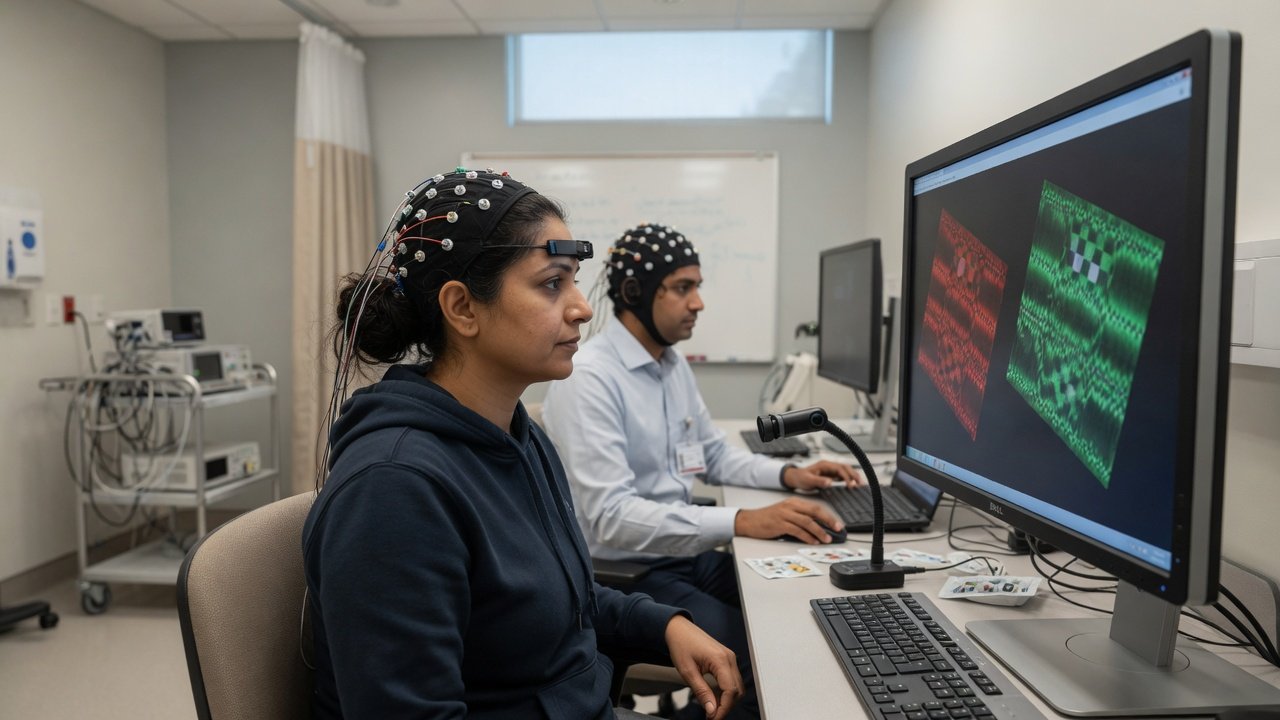
Featured image: AI-generated conceptual editorial image – not from the cited study / not a clinical photograph. تصویر: مصنوعی ذہانت سے تیار کردہ تصویری اداریہ — حوالہ شدہ تحقیق سے نہیں / کلینیکل فوٹو نہیں۔
Read the source → | اصل ماخذ پڑھیں ←
Educational digest only — not personal medical advice, not a diagnosis, and not a treatment recommendation. Discuss decisions with your treating clinician. یہ صرف تعلیمی خلاصہ ہے — ذاتی طبی مشورہ، تشخیص یا علاج کی سفارش نہیں۔ فیصلے اپنے معالج سے کریں۔
